One operation is running 1,732 clones of 475 Shopify brands. Same build, same address pattern, the same few providers. One of its servers alone holds fake stores for 48 different brands.
It’s one corner of a bigger problem: Recon has found 153,502 clones of Shopify stores and watches for clones of 790,573 stores.
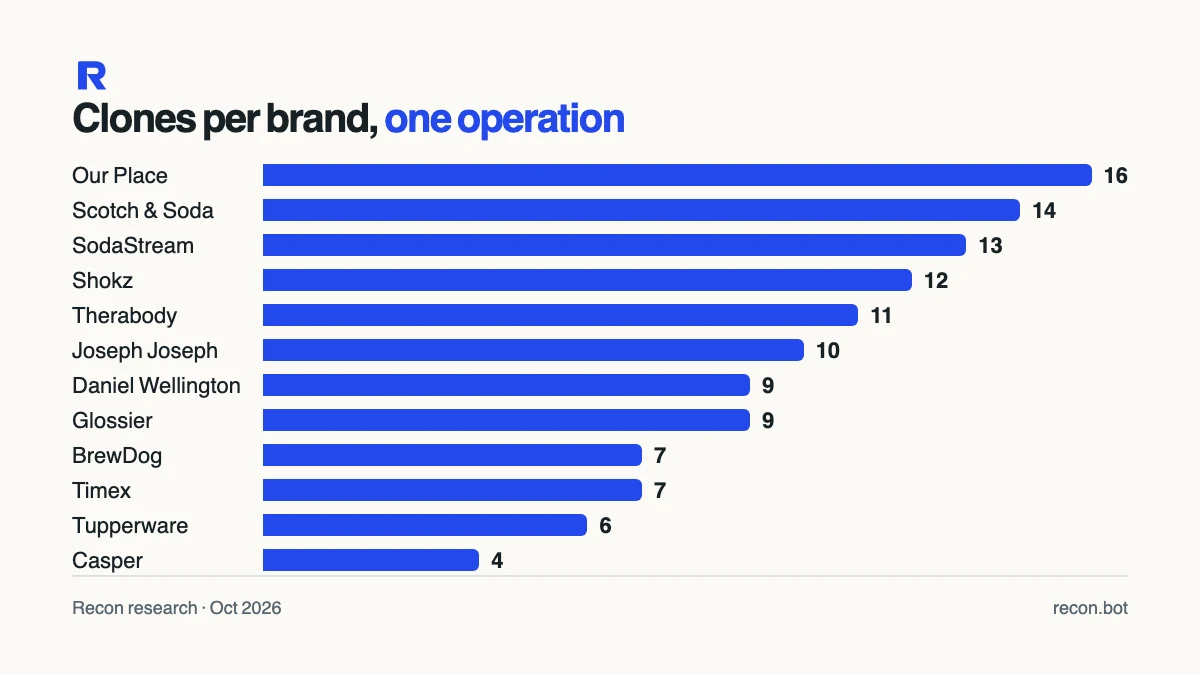
Its targets include Glossier, SodaStream, Therabody, Our Place, Scotch & Soda, Shokz, Joseph Joseph, Daniel Wellington, BrewDog, Timex, Tupperware and Casper.
What a clone looks like
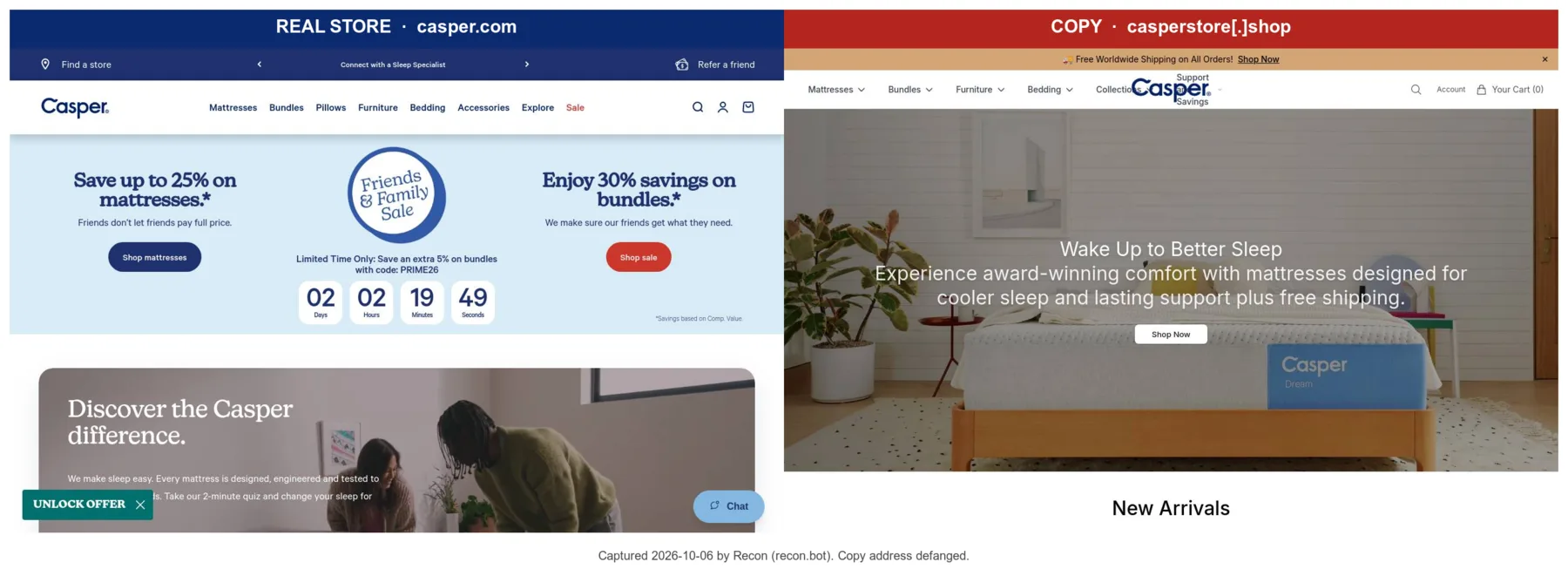
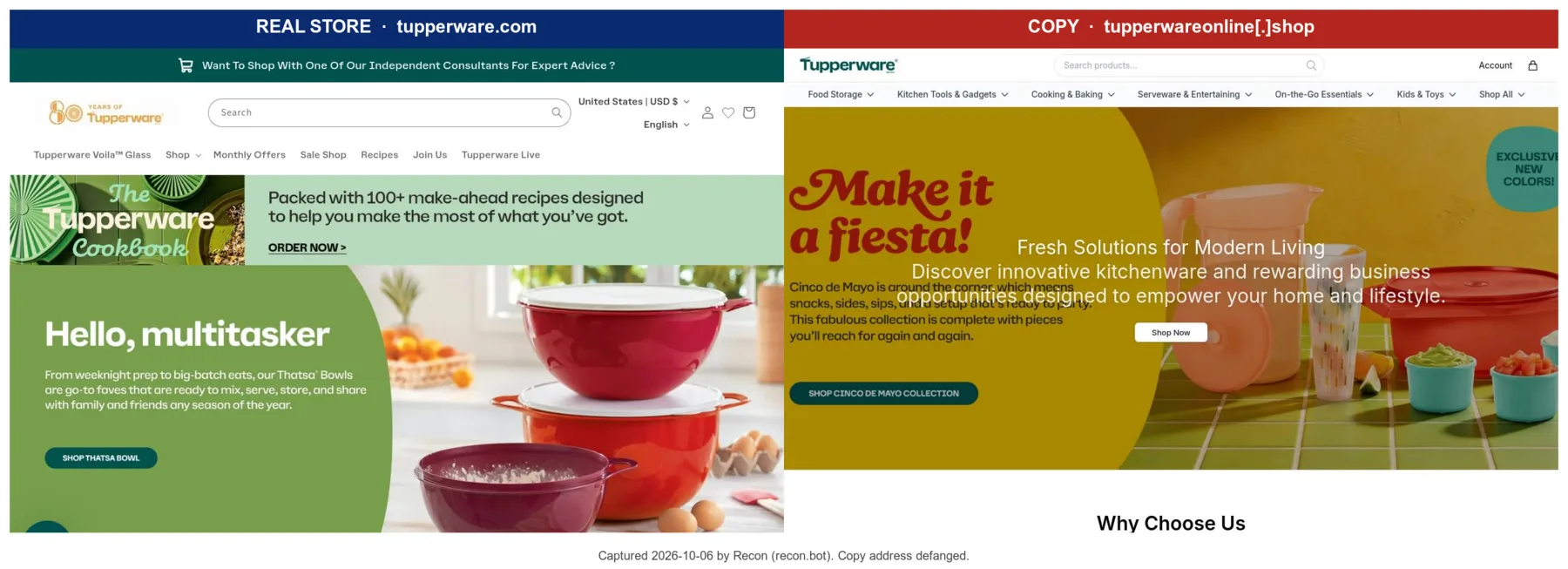
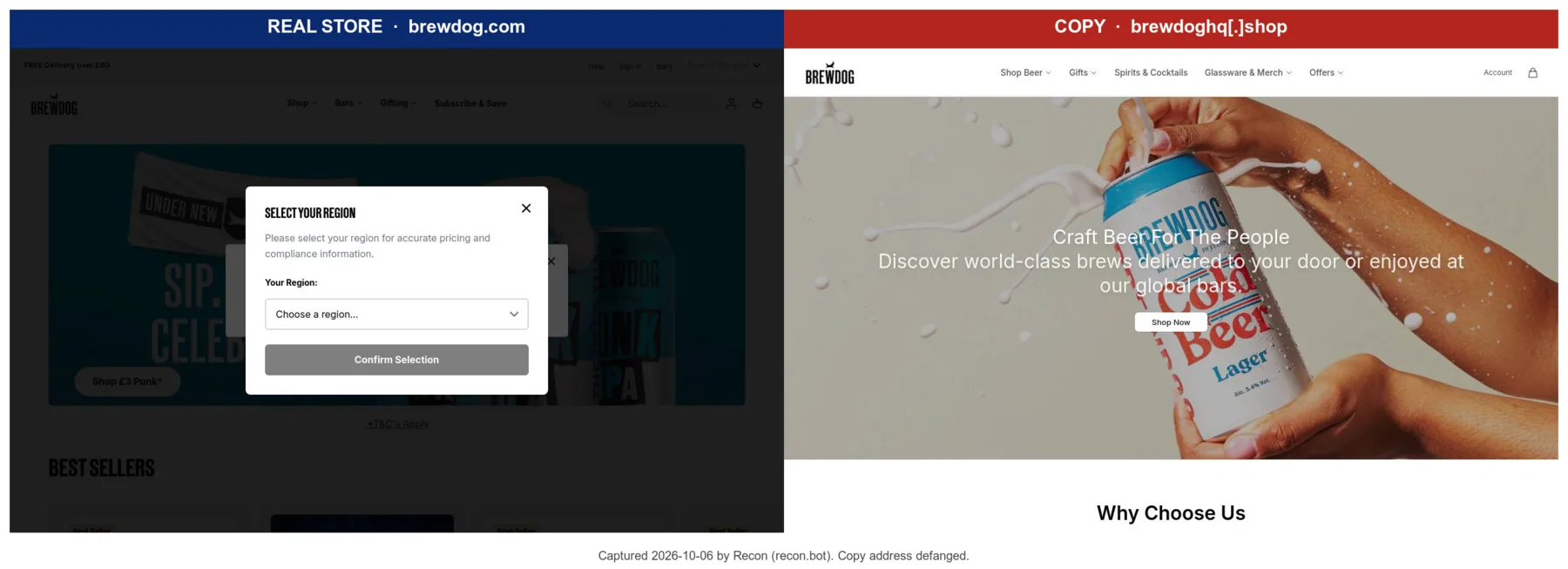
Each clone uses the brand’s name, logo, product photos, product names and prices. To a shopper it looks like the brand’s own website. The address gives it away, but only if you look closely:
glossierhq[.]shopmyglossier[.]shopglossierofficial[.]shop
None of these belong to Glossier.
![Glossier's real store at glossier.com next to a clone at glossierhq[.]shop, captured October 6, 2026](/research/copy-factory/glossier.webp)
The same operation runs clones of hundreds of other brands. We went back on October 13 and captured more of them.
Our Place. The clone calls itself “Our Place” and shows the brand’s green Always Pan.
![Our Place's real store at fromourplace.com next to a clone at ourplaceofficial[.]shop, captured October 13, 2026](/research/copy-factory/ourplace.webp)
Daniel Wellington. Same wordmark and menu, with “Up to 70% off” across the top.
![Daniel Wellington's real store next to a clone at danielwellingtonboutique[.]shop, captured October 13, 2026](/research/copy-factory/danielwellington.webp)
SodaStream. A clone written in Polish, using SodaStream’s own campaign images.
![SodaStream's real store next to a Polish-language clone at sodastreamoutlet[.]shop, captured October 13, 2026](/research/copy-factory/sodastream.webp)
Casper, Tupperware and BrewDog, captured October 6:
Is your store being cloned? Recon watches for clones of your store and helps you get them taken down. Add Recon to Shopify or run a free clone check.
How the operation works
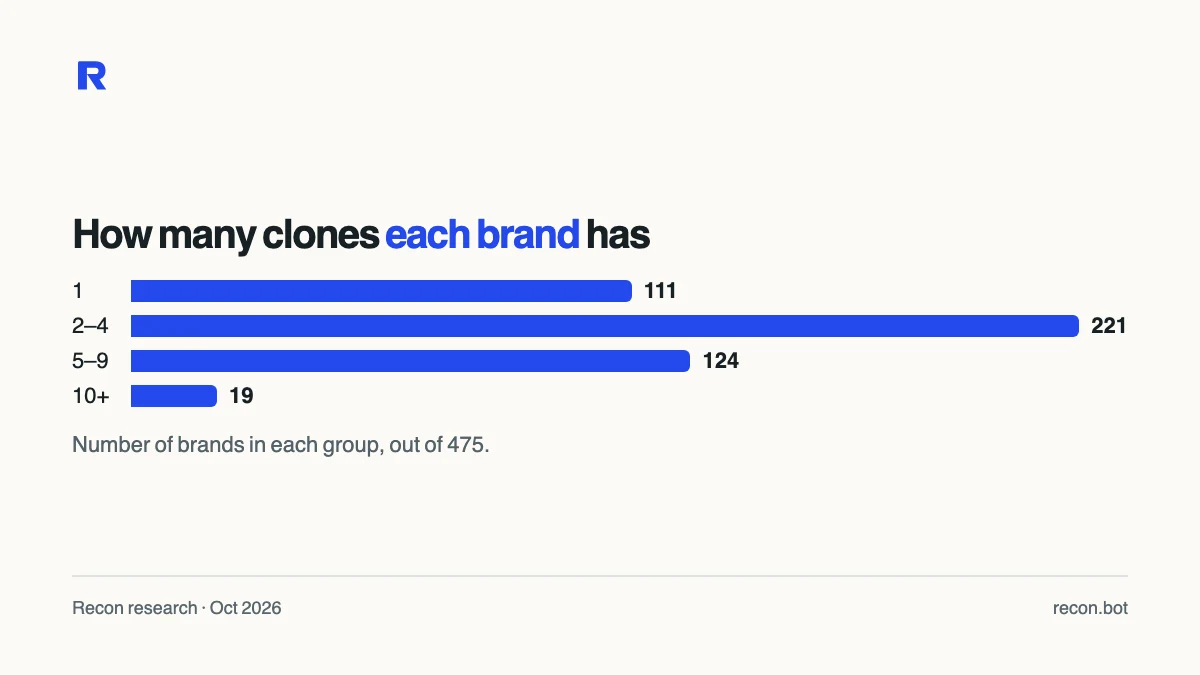
It clones the same brands again and again. The typical brand it targets has 2 to 4 clones. 19 brands have 10 or more. Our Place has 16. Scotch & Soda has 14. SodaStream has 13.
It uses one address pattern. 95% of its clones sit on .shop addresses made from the brand name plus a word (combosquatting), such as “store”, “online”, “hq” or “official”.
It packs many brands onto one server. The busiest server we found holds 49 clones of 48 different brands. If a brand gets one clone removed, its other clones stay up. So do the other brands’ clones.
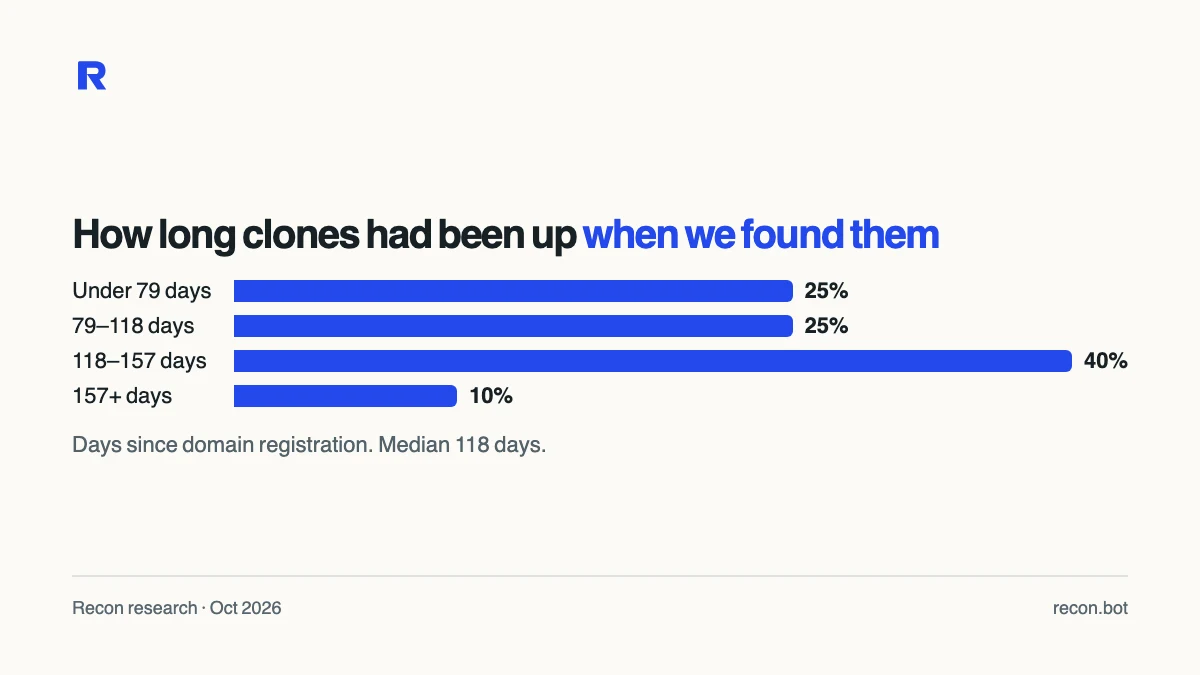
Its clones stay up for months. When we found them, the clones had been registered for a median of 118 days, about four months. 90% were less than 157 days old.
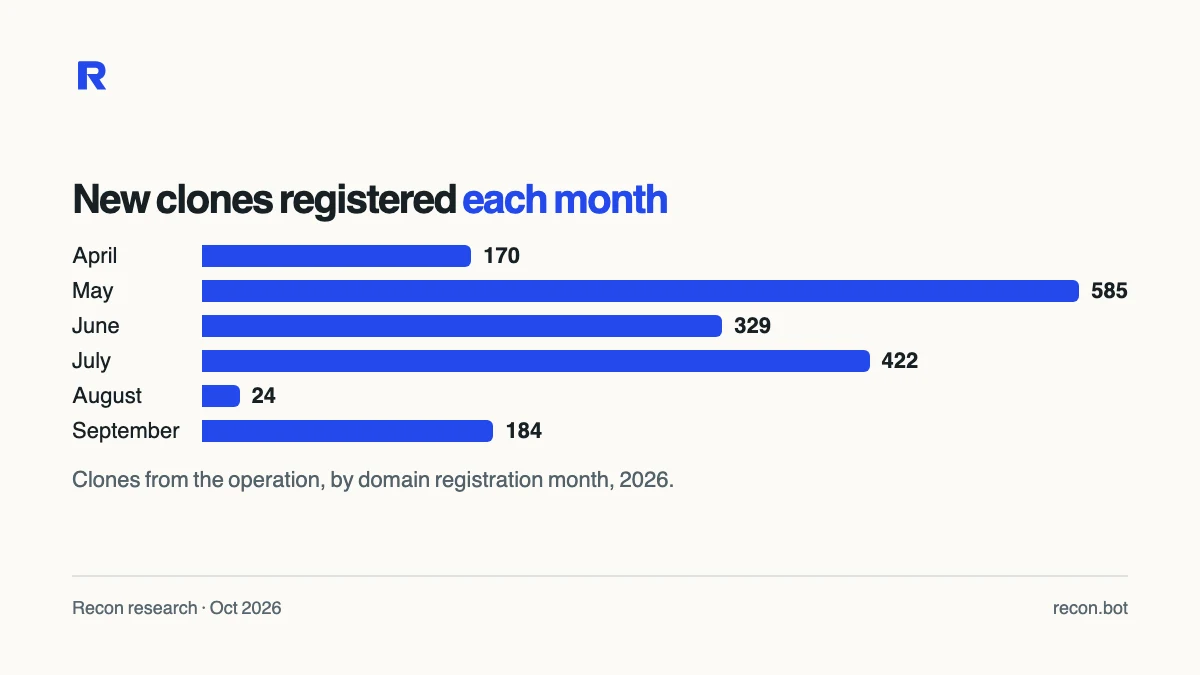
It works in waves. It registered 585 clones in May and 422 in July. Then it slowed to 24 in August, and picked up again in September with 184.
Why this matters for your brand
A shopper who buys from a clone pays the clone. (How fake sites steal from Shopify brands.) If anything arrives at all, it isn’t from you. Then they contact you: “Where is my order?” The refund request, the bad review and the lost trust land on your brand.
A clone that stays up for four months has four months to take orders in your name.
Getting a clone taken down
Finding a clone is half the job. Getting it down means reporting it to the right people, with the right evidence, in the right format. Most brands don’t know who those people are.
Each clone has a registrar that sold the address, a host that serves the pages, and a registry that runs the ending, such as .shop. (Brand abuse reporting explains who handles what.) Browser blocklists like Google Safe Browsing and Microsoft can warn shoppers away while you wait. Each one wants a different report.
Recon does this part with you. For every clone it finds, it looks up who to report to and writes the takedown notices, with dated screenshots and the evidence attached. You review them and send them from your own address. Pro customers can join early access, where you authorize Recon once and it files the reports for you in one click. Doing it yourself? Start with our free takedown templates and DMCA notice generator.
The registrar or host still decides whether a site comes down. A complete report, sent to the right place, gives them every reason to act.
What you can do
- Search for your name on
.shop. Or run a free clone check. Try your brand name plus “store”, “online”, “shop”, “official” and “hq”. - Report every clone, not just one. One report covers one address. List all of them. (How to report a fake Shopify store.)
- Report to the registrar and the host. These clones share a few providers, so one report to each can name many clones.
- Keep dated screenshots. Clones change and move.
- Keep watching. This operation registers new addresses most months.
Check your store for clones free. It takes a minute and needs no account. Or add Recon to Shopify to keep checking in the background and get takedown help for every clone it finds.
How we did this
- Screenshots: Glossier, Casper, Tupperware and BrewDog captured October 6, 2026; Our Place, Daniel Wellington and SodaStream captured October 13, 2026, in a separate browser, without interacting with the clone sites.
- Brands: we checked 1,187 well-known Shopify stores, ranked 300 to 2,000 by traffic, for live clones in October 2026. We left out a few large corporations and brand names too generic to search. Clones of 530 of them were confirmed.
- Finding clones: Recon checked web addresses related to each brand’s name, and compared each live page with the brand’s real store. We count only pages Recon confirmed as clones. A brand’s own second stores and redirects don’t count.
- Grouping clones: clones that share the same build were counted as one operation. Clones that didn’t, or didn’t load when we checked, are left out of every operation figure.
- Registry data: registration dates come from public registry records.
Limits
- This is a sample of well-known brands, not every Shopify store.
- Our search favours addresses built from a brand’s name, which is this operation’s pattern. So we don’t claim what share of all clones it makes. Clones on unrelated addresses are missed, so the real numbers can only be higher.
- Registry and hosting records show where a clone is registered and hosted. They don’t show who runs it. We make no claim about the operator.
- Figures are a snapshot from October 6, 2026. Clones go up and come down every day.
We don’t publish the full list of clone addresses.
Related reading
- Taylor Swift, SKIMS, Stanley: inside 153,000 clones of Shopify stores
- Someone cloned your store. Here’s what to do
- How to check if your store has been cloned
- Free DMCA takedown notice generator
- Lookalike domains
Recon is a Shopify app that watches for clones of your store and lookalike web addresses, and helps you get them taken down. See pricing.
Explore Recon’s Shopify brand protection tools
All articles